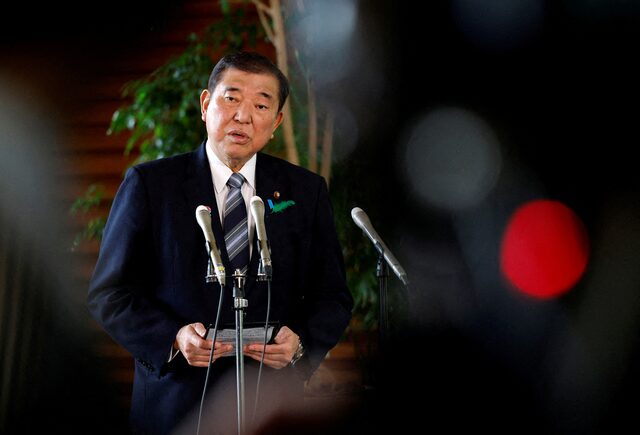
The People and the Weight of the Invisible Tax
Japan Was the Herald.
In the streets of Tokyo, before the Ministry of Finance, the people awakened. Not through imported ideology, nor via an academic manifesto, but through what is most intimate and brutal: the stark realization that it is not the financiers or corporate magnates who bear the weight of the modern state, but ordinary workers—those who live on the edge of survival.
The so-called “consumption tax” (VAT) became the breaking point of this awakening. A levy that appeared neutral, uniform for all, revealed itself at its core to be deeply unequal: it weighs most heavily on those with the least. The rich can shift wealth into tax havens, restructure assets, live off rents and dividends. The poor pay—not just in cash, but in their future—through bread, rice, milk. Without homes, without children, without ground.
The End of the Distributive Illusion
For decades, the social contract sold an illusion: “the rich sustain the people through taxes.” But the truth, now exposed, is that the state machine is built primarily on the backs of the silent majority. A distorted redistribution, where the people pay to sustain the fiction that someone else pays for them.
Here, at the heart of this contradiction, crisis begins—not merely fiscal, but spiritual. For when the people recognize the pact as a farce, the legitimacy of the state wavers. The state ceases to be the guardian of community and becomes an unjust collector, a usurer of time and hope.
The Movement of the 21st Century
What stirs in Japan today is a harbinger of what will spread across the developed world.
In Europe, the precarious young person who pays VAT on a coffee but cannot afford housing.
In the United States, families crushed by health insurance and invisible fees.
In Portugal, those who see the green bill as a symbol of a nation that takes everything and returns nothing.
All these faces form the same archetype: the betrayed taxpayer. It is this figure who may ignite the 21st century.
Risk and Promise
History offers two paths when taxation becomes unbearable:
The path of destruction: bloody revolts, populisms that turn anger into hate.
The path of renewal: rare moments when fiscal pain sparks social creativity, as with the American New Deal.
The century ahead hangs by a thread. Fiscal revolt may open the door to authoritarianism—but it may also mark the beginning of a radical rebirth of the social contract.
The Tax of Conscience
If consumption oppresses, and wages imprison, then the future will demand a new foundation for taxation:
a tax on unproductive speculation,
a fair sharing of wealth,
but above all, the recognition that true wealth lies in living consciousness.
Let every creative act, every gesture of care, every breath of wisdom be seen as essential contribution. Let the economy become spiritualized—and let taxation be communion, not punishment.
2040 — The Renewed Contract
If humanity dares, in two decades, a new pact could emerge:
A less centralized, more community-based state.
A fair taxation system that lifts the burden of tax from bread and housing, and taxes global flows with the precision of machines.
A civilizational spirituality that sees taxation not as debt, but as offering to the common good.
Then, Japan’s cry will not be forgotten: it will be remembered as the beginning of a cycle in which the people finally demanded justice—and paved the way for the very idea of tax to become sacred, not profane.