 ITER and the New Race to the Moon: The Fire Humanity Seeks to Tame
In the heart of Provence, at Saint-Paul-lès-Durance, rises ITER — the greatest scientific temple ever built by humankind. It is not merely a reactor; it is the Sun made machine, the collective effort of thirty-five nations to master the primordial fire and free themselves from the shadow of scarcity. Here, between stone and plasma, humanity attempts to reproduce the gesture of Creation itself: to make light from matter.
The tokamak of ITER — a toroidal chamber where magnetic fields confine plasma at one hundred million degrees Celsius — recreates the heart of a star. Its goal: to prove that nuclear fusion can generate ten times more energy than it consumes, thus inaugurating the age of clean and infinite power. Its first experimental operations, planned for the 2030s, mark the turning point between dream and substance, between Prometheus and technology.
In Cadarache, its twin reactor, WEST (W Environment in Steady State), has already whispered that the dream draws near to matter. In February 2025, plasma was kept stable for twenty-two minutes at fifty million degrees Celsius — long enough to show that a star can, at last, be contained within metal.
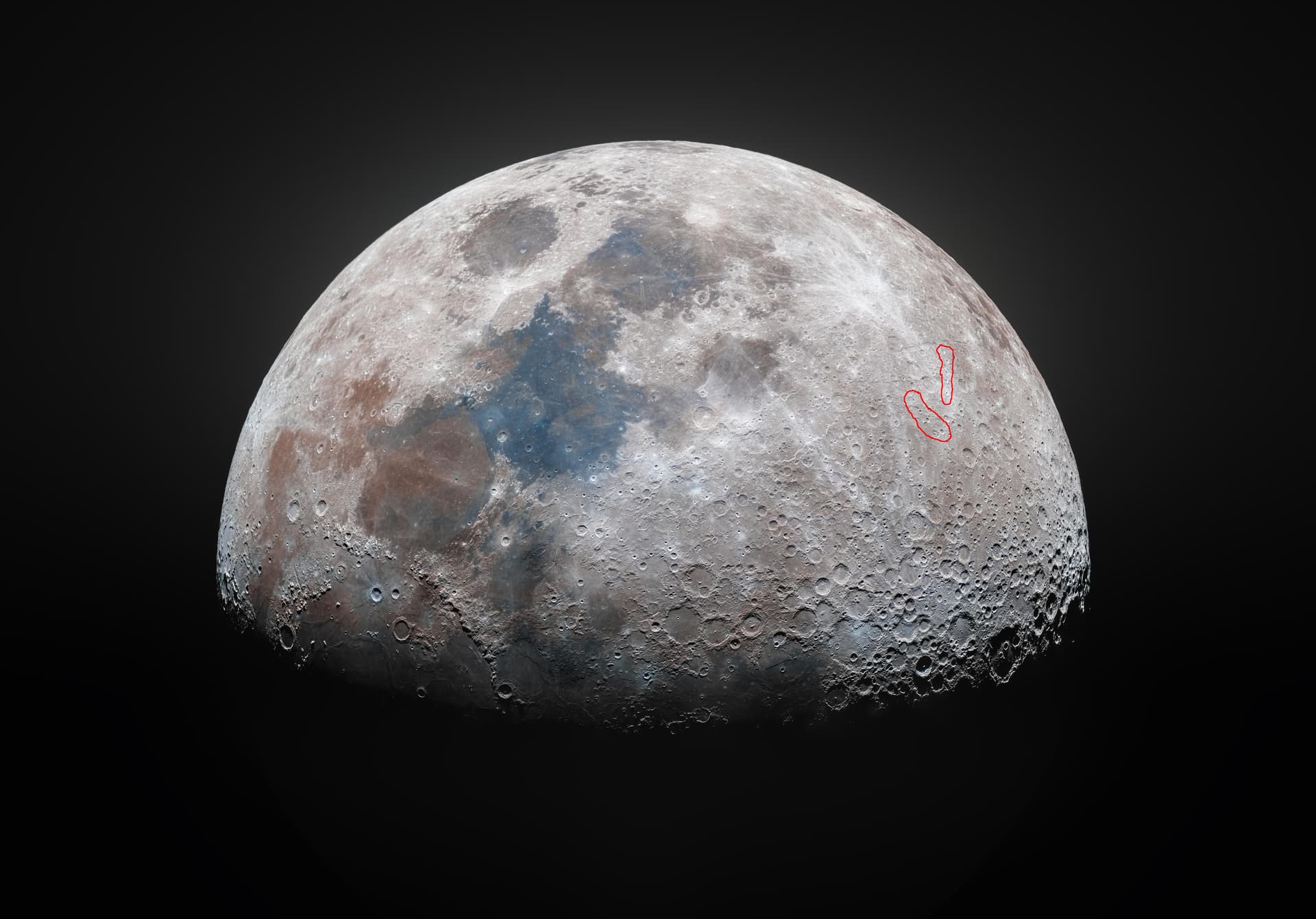
Yet there lies a hidden secret behind this promise of abundance: the purest, most stable and least radioactive form of fusion requires a rare isotope, almost absent on Earth — helium-3 (³He) — found in abundance within the dust of the Moon. It is this tiny atom that turns the Moon from mirror to cosmic mine, from symbol to resource, rekindling the race for the satellite.
The great powers once again lift their eyes to the heavens — not for poetry, but for power: whoever masters helium-3 will master the miniature Sun, and with it, energy at the price of eternity.
Thus, what was once the stage of spiritual dreaming — the Moon, companion of myths and tides — now becomes the battlefield of the future. And fusion, more than a technical feat, reveals itself as a civilizational rite of passage: humankind strives to recreate the fire of the Sun, not only to illuminate the world but to understand itself.
Between cosmic dream and earthly geopolitics, ITER stands as the new Grail of energy: a ring of plasma where science seeks the mystery once called God.